
Prove AI governance. Accelerate delivery.
Research-grounded. Built for regulated AI at enterprise scale.






Approvals happen without a consistent risk view, leading to reversals, rework, and slow time to launch.
Different metrics and thresholds produce conflicting results, blocking reliable go/no-go calls.
Technical findings are hard to translate into legal or risk language, slowing reviews and decisions.
Controls and evidence lag behind changing requirements, increasing exposure to audits and penalties.
A single risk view ties metrics, tests, and approvals to each system.
Shared metrics and thresholds make results comparable and repeatable.
Technical evidence maps to policy language for faster review.
Controls and documentation stay current for audits and AI Act compliance.
Scattered AI assets → one governed register.
Unknown risk → prioritized action.
Ad-hoc evidence → instant reports.
The Governance Loop
Registry
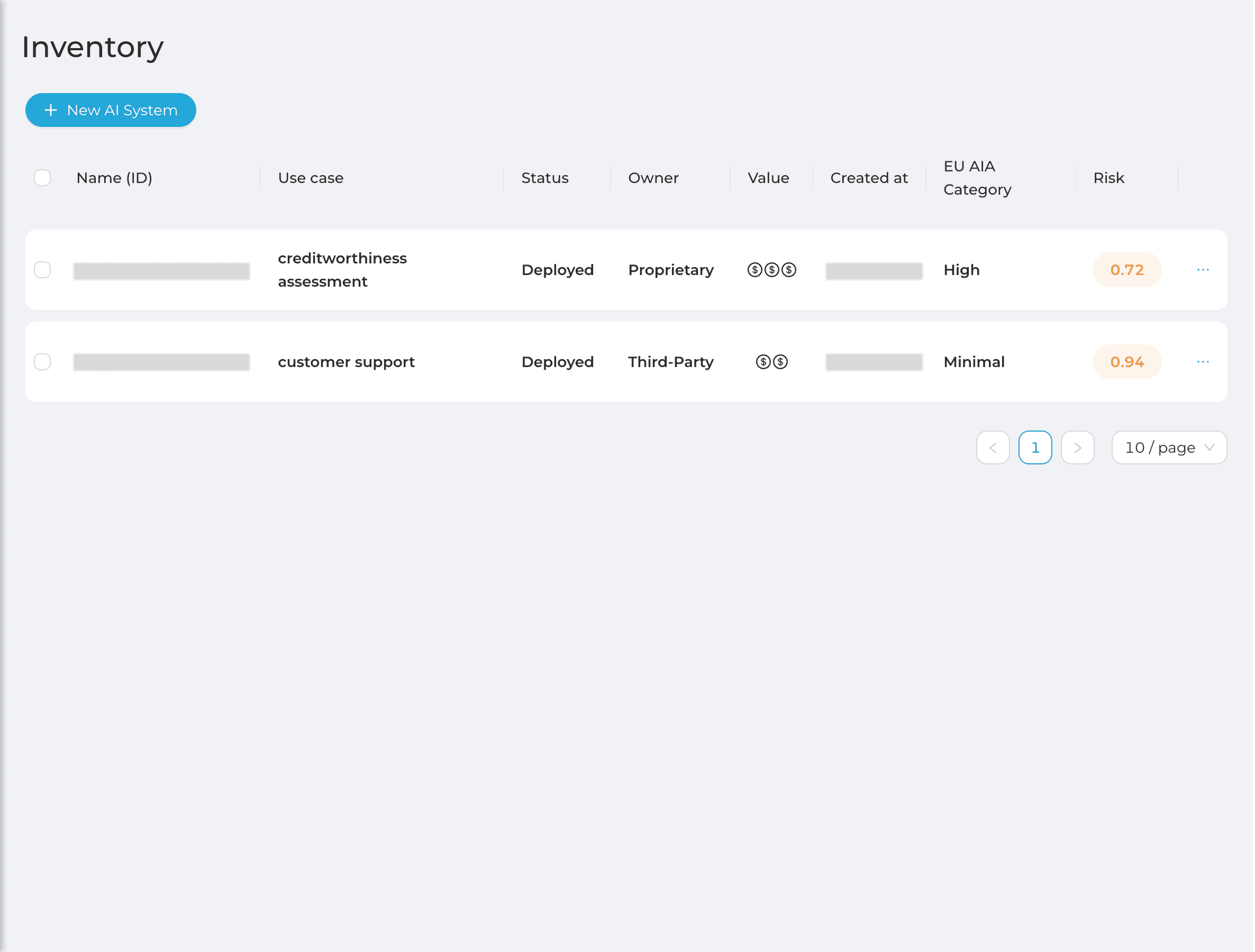
Capture every AI system and owner in one catalog.
Identify
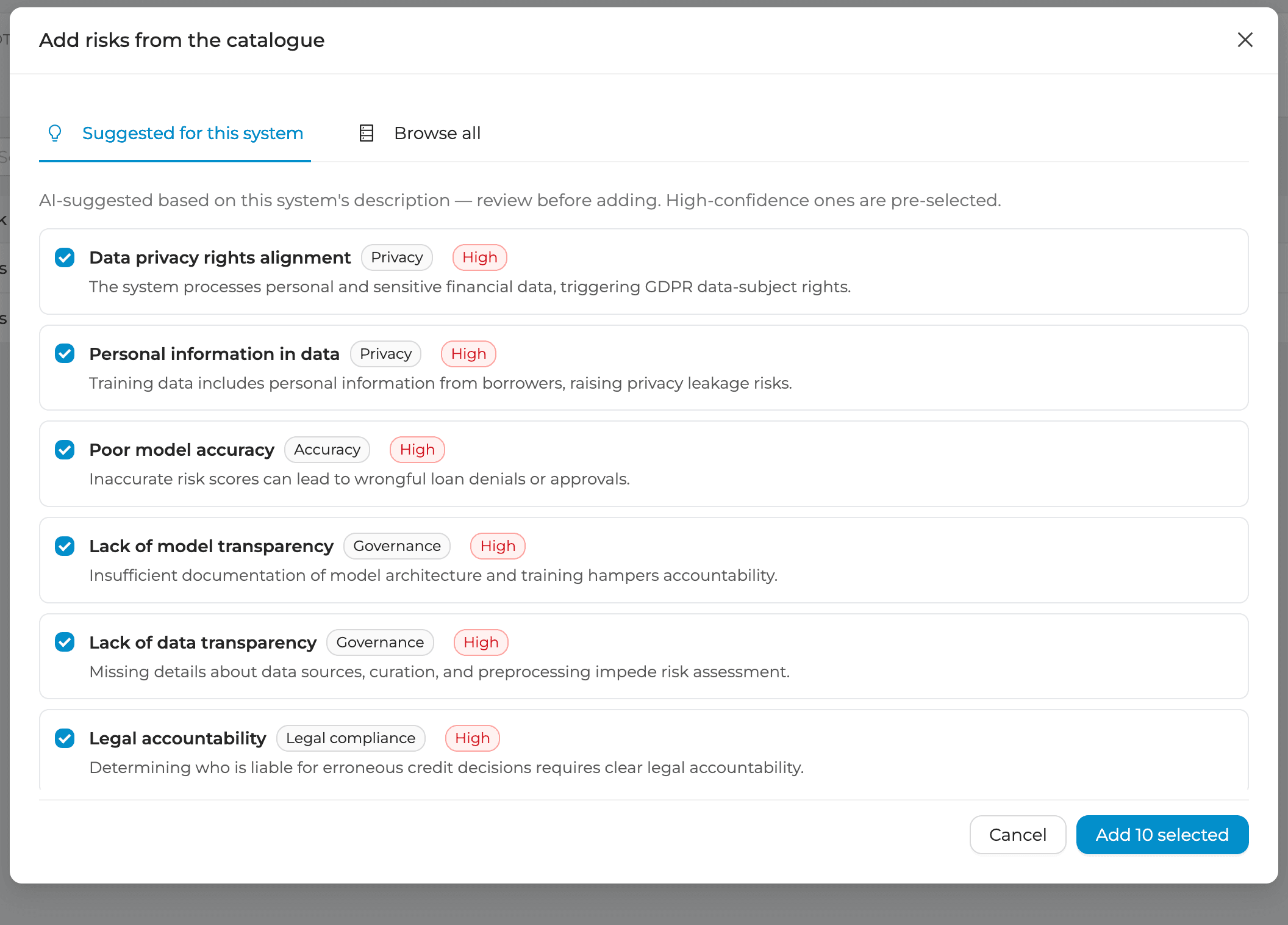
Build each system's risk register from the IBM Atlas or AI suggestions, rated by likelihood and severity.
Metrics & Techniques
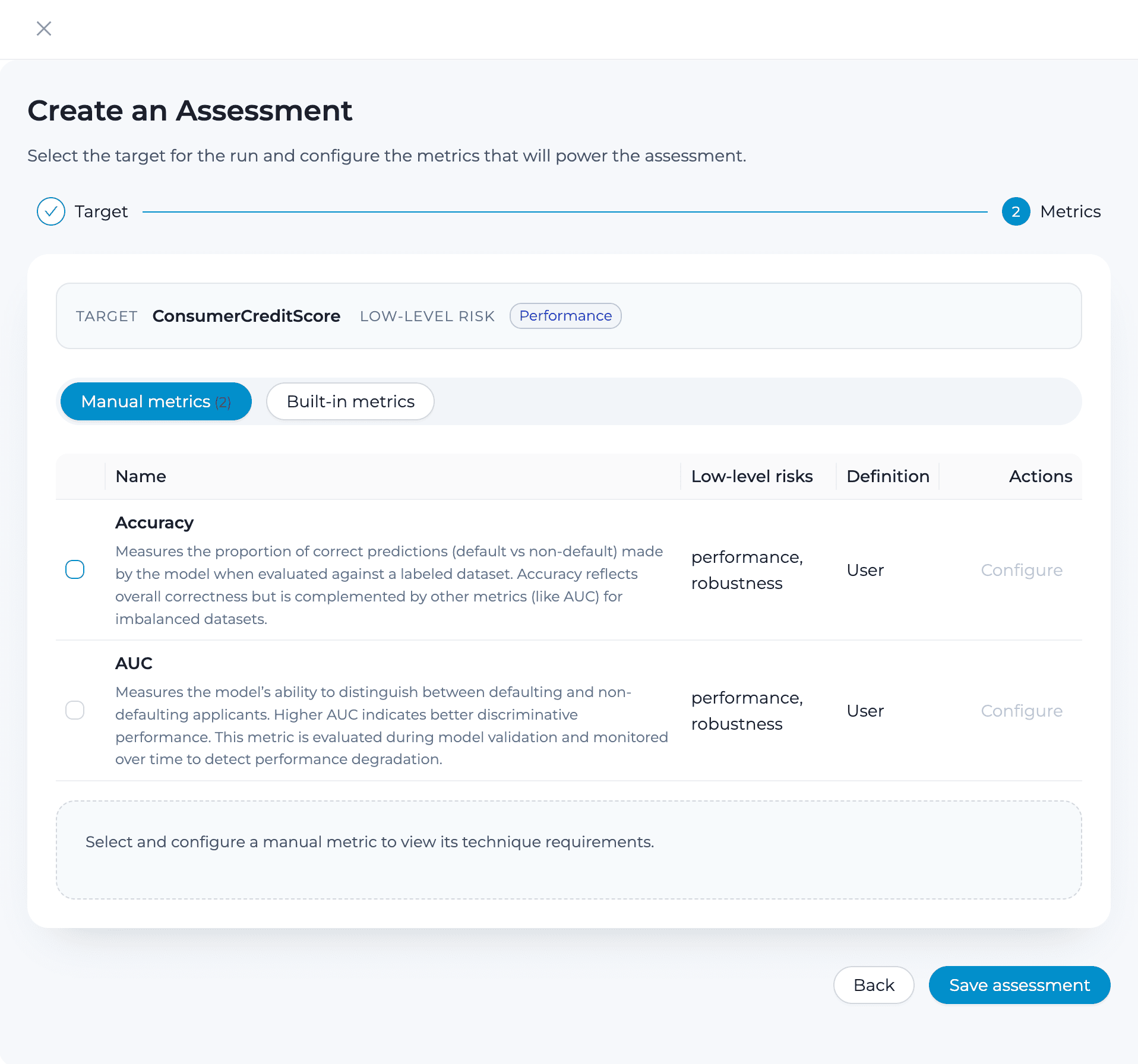
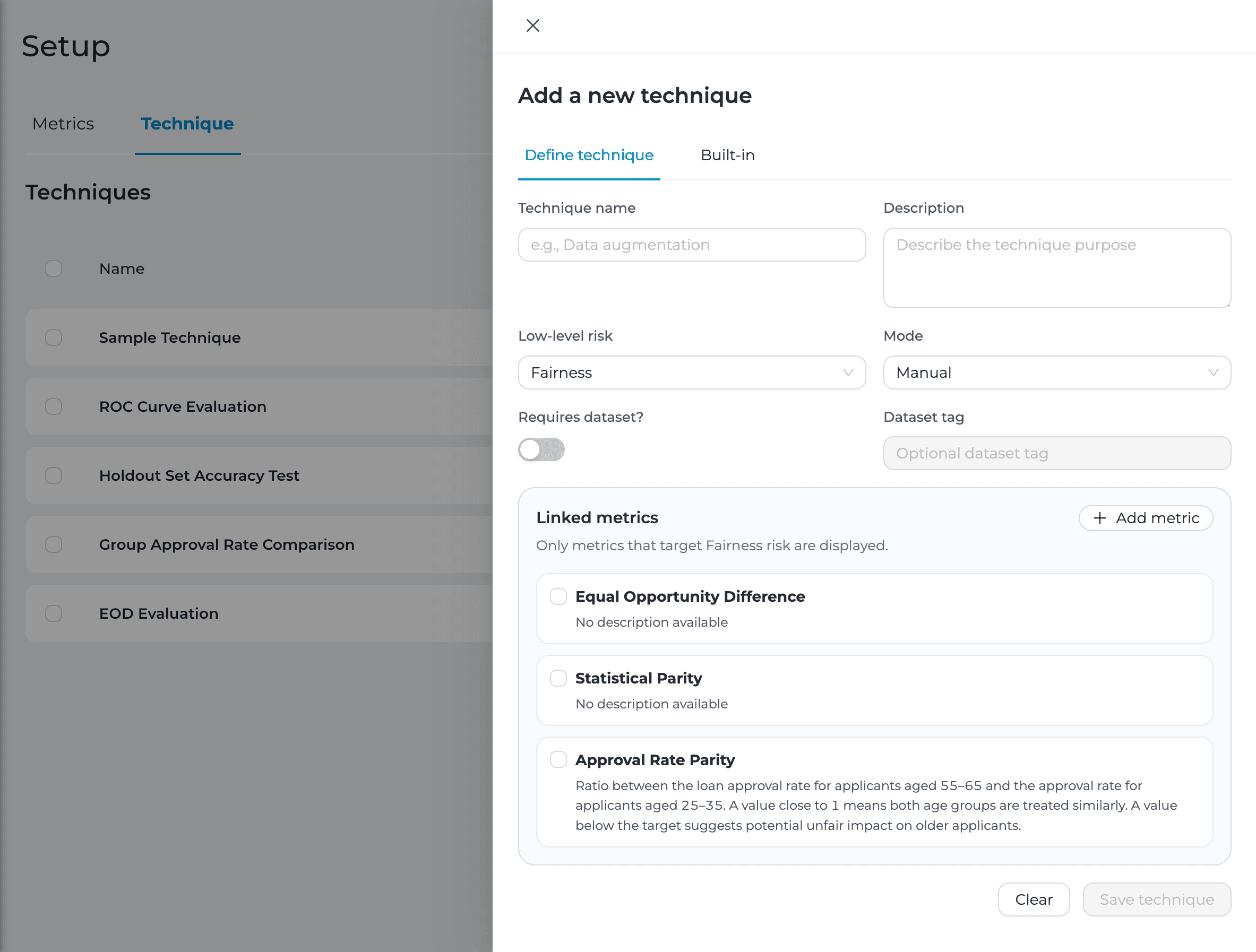
Define and automate tests and mitigation steps.
Assess
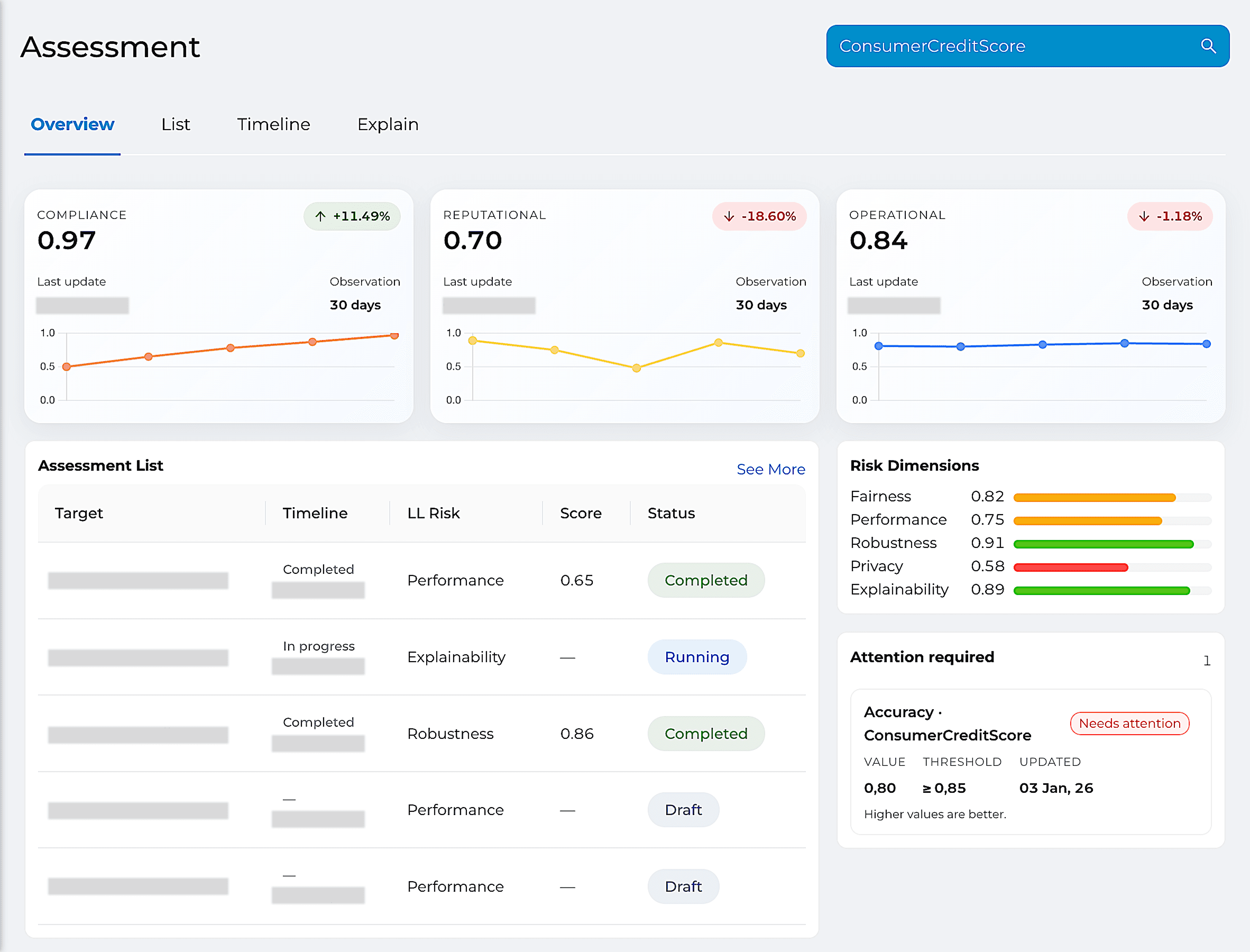
Test and score risk to identify what needs attention.
Mitigate
Track fixes by method, stage, and status.
Comply
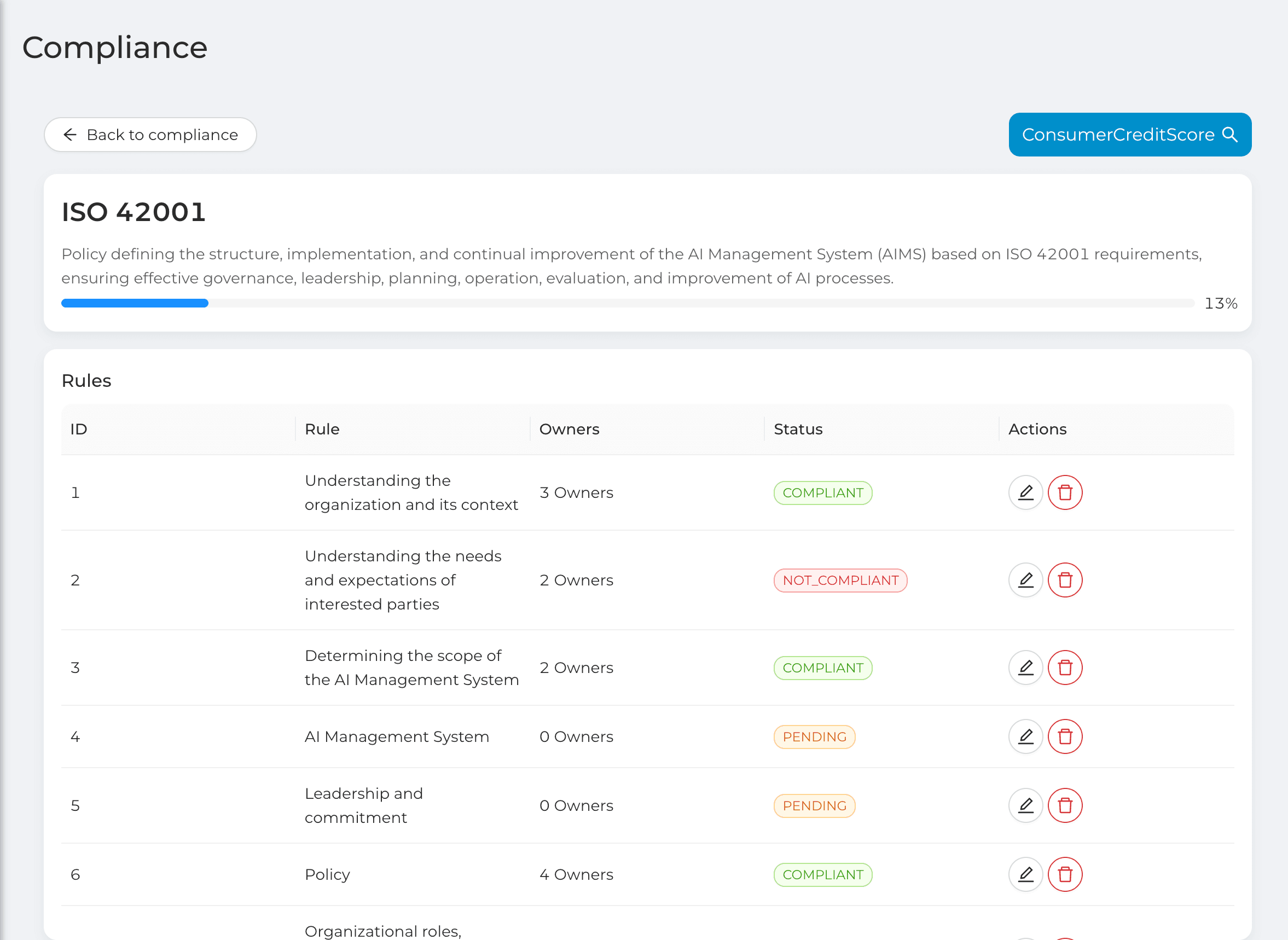
Link regulatory and internal policies to systems to assure compliance.
Audit
Export evidence-ready reports in minutes.
Risk coverage
Two complementary lenses. Quantitative testing scores every system on five technical dimensions. Qualitative assessment identifies risk across the far broader taxonomy of the IBM AI Risk Atlas.
Automate test execution with state-of-the-art techniques from the built-in library – or integrate your own testing workflow. Metrics with acceptable thresholds across the five dimensions produce risk scores you can track over time, with alerts when values need attention.
A structured risk register with likelihood and severity ratings, powered by the integrated IBM AI Risk Atlas: 99 risks across 16 categories – from privacy and fairness to societal impact, misuse, and value alignment – with AI-suggested risks for each system.
The five technical dimensions we measure
Accuracy and reliability under real operating conditions.
Bias detection across groups, with measurable parity metrics.
Protection of personal and sensitive data across the lifecycle.
Resilience to perturbations and adversarial inputs.
Decisions that can be understood, justified, and audited.
Governance you can prove
Centralize every AI system with ownership, value, and EU AI Act context in a single operational view.
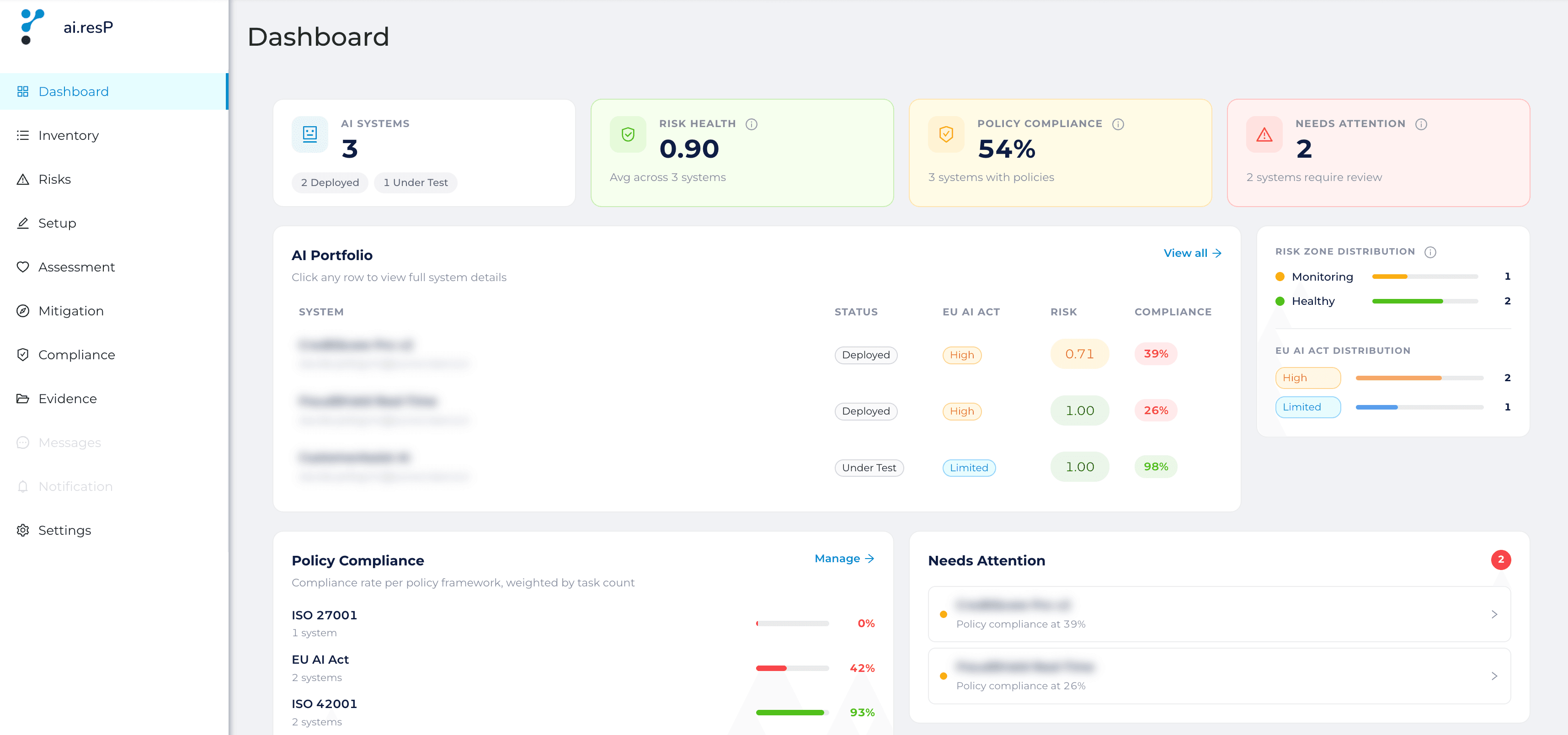
Move from ad-hoc evidence to continuous governance with traceable metrics, mitigation, and compliance status.
Feature pillars
Single catalog with owners, value, EU AI Act category, and risk.
Define quantifiable metrics per risk with acceptable thresholds.
Testing and mitigation techniques to automate workflows.
Trend risk, detect attention items, and track status.
Policy packs, actionable controls, and evidence generation.
AI-native by design
Three built-in capabilities turn governance from paperwork into an assisted, evidence-grounded workflow.
Reviews each compliance task against the relevant clause and its evidence, returning a structured verdict – grounded in the supported standards and your internal policy packs. Advisory, always traceable.
Drafts evidence narratives per policy clause from your team's notes, anchored to the normative text – no invented references.
Maps each AI system to applicable risks from the integrated IBM AI Risk Atlas, with a confidence level and a rationale for every suggestion – so risk identification starts from a grounded shortlist, not a blank page.
Move models into production faster with fewer surprises. Get clarity on model risk, performance, and lineage so teams can ship with confidence.
Turn technical evidence into audit-ready outputs. Align systems to policy requirements and maintain oversight without slowing innovation.
Trust & deployment
Run as managed SaaS, or fully on-premises when data residency and isolation are requirements.
A university spin-off of Federico II and CINI – methods grounded in peer-reviewed research on AI dependability.
Built-in policy packs from the EU AI Act to ISO standards – plus custom packs you define for your internal policies, with the same workflow and evidence.
Time-stamped evidence across the whole lifecycle, exportable for auditors and customer due diligence.


FAQ
See how your teams can govern AI and accelerate delivery.